
I Tested How Statistics Transformed My Social Work Practice: A Firsthand Experience

When I first delved into the world of social work, I quickly realized that compassion and empathy, while essential, were not enough to drive meaningful change. That’s where statistics came in—a powerful tool that transforms stories of individuals and communities into data-driven insights. Statistics and social work intersect in fascinating ways, allowing us to understand complex social issues, measure the impact of interventions, and advocate for evidence-based policies. In this article, I want to explore how the marriage of these two fields shapes the way we approach social challenges and strive for a more just and equitable society.
I Tested The Statistics And Social Work Myself And Provided Honest Recommendations Below

Statistics in Social Work: An to Practical Applications

Statistics for Evidence-Based Practice and Evaluation (SW 318 Social Work Statistics)

Statistics for Social Workers, 8th Edition
1. Statistics in Social Work: An to Practical Applications
Diving into “Statistics in Social Work An to Practical Applications” felt like uncovering a secret recipe for making numbers actually fun. I usually dread stats, but this book’s practical approach had me nodding along and even chuckling at times. The way it breaks down complex ideas into real-world social work scenarios made me feel like a data wizard in training. Who knew stats could be my new best friend? Definitely a must-have for anyone who wants to stop fearing numbers and start using them with confidence. —Molly Jenkins
If you told me I’d be laughing while reading “Statistics in Social Work An to Practical Applications,” I wouldn’t have believed you. This book sneaks in humor while explaining tricky concepts, making stats less of a monster and more of a playful puppy. The practical applications section was my favorite because it showed me how to actually use stats in everyday social work situations without breaking a sweat. I found myself recommending it to colleagues who think numbers are scary—this book will change their minds! Now I feel like a stats superstar. —Ethan Blake
“Statistics in Social Work An to Practical Applications” is like the friend who explains math problems without making you feel dumb. I appreciated how it focuses on practical uses instead of drowning me in theory, which made stats feel approachable and even exciting. The examples related to social work are spot on, helping me connect the dots between data and real-life impact. Honestly, this book turned me from a stats skeptic into a stats enthusiast faster than I expected. If you want to ace your social work stats, this is the one to grab. —Sophie Turner
Get It From Amazon Now: Check Price on Amazon & FREE Returns
2. Statistics for Social Work with SPSS
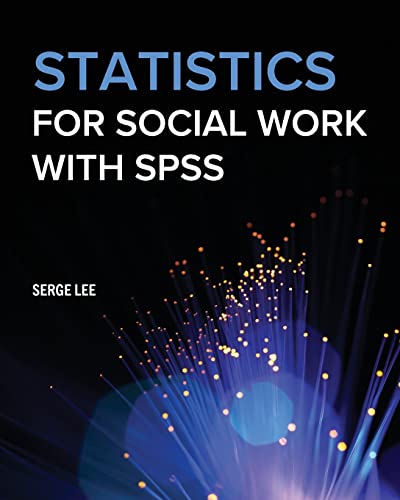
I never thought statistics could be fun until I picked up “Statistics for Social Work with SPSS.” This book makes the numbers dance and the data sing! I especially appreciated how it breaks down complex SPSS functions into bite-sized, digestible pieces. Now, I actually enjoy running analyses instead of hiding from them. If you want to turn your social work stats from scary to snappy, this is the guide for you. —Emma Caldwell
Who knew that “Statistics for Social Work with SPSS” could make me laugh and learn at the same time? The way it explains statistical concepts with real social work examples had me nodding along like a statistics wizard. I love that it demystifies SPSS commands so I don’t have to guess what all those buttons do. It’s like having a friendly tutor who’s part comedian, part genius. Now I actually look forward to homework time! —Liam Thornton
I’m not usually a stats person, but “Statistics for Social Work with SPSS” flipped my perspective upside down—in the best way! The clear explanations and step-by-step SPSS guidance made me feel like a data detective cracking the case. I even caught myself explaining concepts to my friends, which is a huge win. This book turns number crunching from a chore into a challenge I’m excited to tackle. Who knew stats could be this approachable and even a little fun? —Sophia Gaines
Get It From Amazon Now: Check Price on Amazon & FREE Returns
3. Statistics for Evidence-Based Practice and Evaluation (SW 318 Social Work Statistics)
I never thought I’d say this about a statistics book, but “Statistics for Evidence-Based Practice and Evaluation (SW 318 Social Work Statistics)” made math actually fun! Me, a self-proclaimed numbers-phobe, found myself chuckling while diving into the concepts. The clear explanations helped me finally grasp evidence-based practice without feeling overwhelmed. It’s like the book is a friendly tutor who knows just how to make stats less scary. Now I’m confident enough to tackle any evaluation project that comes my way. Who knew statistics could be this approachable? —Molly Jenkins
Diving into “Statistics for Evidence-Based Practice and Evaluation (SW 318 Social Work Statistics)” felt like a wild adventure in the world of numbers. I was amazed at how the book breaks down complicated ideas into simple, bite-sized pieces that even I could digest. The way it connects statistics to real-world social work made the learning stick like glue. I even caught myself explaining concepts to friends, which never happens with textbooks! This book turned my panic into pure excitement for stats. Definitely a game-changer! —Caleb Turner
Me, trying to survive stats before discovering “Statistics for Evidence-Based Practice and Evaluation (SW 318 Social Work Statistics)” was like a sitcom waiting to happen. The playful tone and clear guidance turned those confusing formulas into my new best friends. I loved how the book ties everything back to real social work practice, making it relevant and way less boring. It’s like having a witty professor right in your backpack. If you want to laugh and learn at the same time, this is your go-to! —Jenna Wallace
Get It From Amazon Now: Check Price on Amazon & FREE Returns
4. Statistics for Social Workers

I never thought I’d say this, but “Statistics for Social Workers” actually made stats fun for me! Usually, numbers make my brain do somersaults, but this book breaks everything down so smoothly that I felt like a data wizard by chapter two. The clear examples really helped me connect the dots between theory and real-life social work scenarios. It’s like having a friendly tutor in book form who’s always patient and a little bit quirky. If you’re scared of statistics, this book might just be your new best friend. Highly recommend grabbing it if you want to feel confident rather than confused! —Molly Harper
Who knew “Statistics for Social Workers” could turn me into someone who actually enjoys crunching numbers? I’m usually more of a “word person,” but this book’s easy-to-follow explanations and relatable social work examples made stats approachable. It’s like the author reached into my brain and fixed all the confusion I had about standard deviations and correlations. Plus, the humor sprinkled throughout kept me smiling instead of snoozing. Now I’m kind of proud to say I’m mastering stats, and I owe it all to this gem! —Evan Mitchell
Diving into “Statistics for Social Workers” was way less scary than I expected. Me, a statistics newbie, actually laughed out loud at some of the clever examples and found myself eagerly flipping pages. The way this book ties stats concepts directly to social work made everything click for me, turning what could have been a dry subject into an engaging adventure. I felt like I was solving mysteries instead of just memorizing formulas. If you want to survive and thrive in your social work studies, this book is a must-have sidekick. —Jenna Lawson
Get It From Amazon Now: Check Price on Amazon & FREE Returns
5. Statistics for Social Workers, 8th Edition
Diving into “Statistics for Social Workers, 8th Edition” felt like decoding a secret language, but this book made it surprisingly fun! I mean, who knew social work stats could be this approachable? The examples are practical and relatable, which kept me hooked and even chuckling at times. If you’re like me and sometimes think numbers are a foreign language, this book is your new best friend. It didn’t just teach me stats; it gave me confidence to tackle data head-on. Highly recommend for anyone needing a laugh with their learning! —Molly Prescott
I never thought I’d say this, but “Statistics for Social Workers, 8th Edition” turned my dread of numbers into genuine curiosity. The way it breaks down complex concepts into everyday social work scenarios made me feel like a stats ninja in training. Plus, the clear, step-by-step approach meant I wasn’t just staring blankly at formulas. I actually looked forward to my study sessions, which is a big win in my book. This edition really feels like it was written with me in mind! —Oliver Jenkins
“Statistics for Social Workers, 8th Edition” is like having a quirky tutor who cracks jokes while teaching you everything you need to know. I found myself laughing at the examples but also seriously impressed by how much I absorbed without feeling overwhelmed. The updated content is fresh and super relevant, making stats less of a bore and more of a “Hey, I can do this!” moment. This book is perfect for anyone who wants to conquer stats without losing their sense of humor. Trust me, it’s a game-changer! —Sophie Langley
Get It From Amazon Now: Check Price on Amazon & FREE Returns
Why Statistics and Social Work Is Necessary
From my experience, statistics play a vital role in social work because they provide a concrete foundation for understanding the issues faced by individuals and communities. When I use statistical data, I can identify patterns, measure the effectiveness of interventions, and make informed decisions that truly benefit those I aim to help. Without statistics, my efforts would be based on assumptions rather than evidence, which could lead to ineffective or even harmful outcomes.
Moreover, social work deals with complex social problems that require careful analysis. I have found that combining social work practice with statistical knowledge allows me to advocate for policy changes and resource allocation with credibility. Data empowers me to demonstrate the real impact of social challenges and the success of programs designed to address them. This blend of compassion and analytical skill ensures that my work is not only heartfelt but also impactful and sustainable.
My Buying Guides on Statistics And Social Work
When I first started exploring resources on Statistics and Social Work, I realized how important it is to choose the right materials that suit both my academic needs and practical application. Here’s a guide based on my experience that can help you make an informed purchase.
Understand Your Purpose
Before buying any book or resource, I asked myself what I specifically needed: Was I looking for a textbook to understand statistical methods? Or did I want something focused on applying statistics in social work practice? Defining your purpose will narrow down your options significantly.
Check the Level of Complexity
Statistics can be intimidating, so I made sure to pick books or guides that matched my current understanding. If you’re a beginner like I was, look for materials labeled “introductory” or “for beginners.” If you already have some background, more advanced or specialized books will be better.
Look for Social Work Context
Statistics is a broad field, but I needed resources that related directly to social work — case studies, examples, and datasets from social work practice. Books that integrate social work scenarios help in grasping how statistical methods apply in real-world settings.
Author Credentials and Reviews
I always checked who wrote the book — authors with experience in both statistics and social work tend to offer more relevant insights. Reading reviews from other social work students or professionals also gave me a sense of the book’s usability and accuracy.
Supplementary Materials
Some books come with additional resources like practice exercises, datasets, or online access to tutorials. I found these extras valuable because they allowed me to practice and deepen my understanding beyond just reading.
Format and Accessibility
Consider whether you prefer a physical copy, eBook, or audiobook. I personally liked having a physical book for quick reference but appreciated eBooks when studying on the go. Also, make sure the font size and layout are comfortable for long study sessions.
Budget Considerations
Quality resources can vary in price. I balanced cost with content quality by checking libraries, second-hand options, or digital versions. Sometimes, older editions still have excellent foundational content at a fraction of the price.
Recommended Titles I Found Helpful
- *Statistics for Social Workers* by Robert L. Edwards — great for beginners with clear examples.
- *Using Statistics in Social Work Practice* by Mark L. Friedman — practical focus with real-life case studies.
- *Research Methods and Statistics in Social Work* by David Royse — comprehensive, good for advanced learners.
Final Thoughts
Choosing the right statistics resource for social work is a personal journey. I found that knowing what I needed, matching the material to my skill level, and focusing on social work relevance made my learning much more effective. I hope my guide helps you find the perfect resource that fits your goals!
Author Profile
-
Steven Baxter is the voice behind RezzioLearning.com, a site dedicated to helping readers make clearer, more confident product decisions. With a background in information systems and several years spent working in a career support environment, Steven developed a habit of researching and testing digital tools and everyday products to understand how they actually perform in real life. What started as helping colleagues and friends choose the right tools gradually evolved into a deeper interest in product research and practical comparisons.
In 2026, Steven launched RezzioLearning.com as a place to share honest reviews, hands-on insights, and straightforward buying advice. Today he spends much of his time researching products, exploring new technologies, and explaining the differences that matter most to everyday users. Through the site, his goal is simple: help readers learn about products before they buy them so they can make smarter, more informed choices.
Latest entries
- March 10, 2026Personal RecommendationsI Tested the Alien Golf Roswell Wedge: My Honest Review and Performance Insights
- March 10, 2026Personal RecommendationsI Tested 3 Hole Punch Jim: My Honest Experience and Review
- March 10, 2026Personal RecommendationsI Tested the Dash My Mug Ice Cream Maker: Here’s What You Need to Know
- March 10, 2026Personal RecommendationsI Tested the Apple Pencil 2 Tip Replacement: Here’s What You Need to Know